The page cannot be found

Possible causes:


  • Baptist explanation: There must be sin in your life. Everyone else opened it fine.
  • Presbyterian explanation: It's not God's will for you to open this link.
  • Word of Faith explanation: You lack the faith to open this link. Your negative words have prevented you from realizing this link's fulfillment.
  • Charismatic explanation: Thou art loosed! Be commanded to OPEN!
  • Unitarian explanation: All links are equal, so if this link doesn't work for you, feel free to experiment with other links that might bring you joy and fulfillment.
  • Buddhist explanation: .........................
  • Episcopalian explanation: Are you saying you have something against homosexuals?
  • Christian Science explanation: There really is no link.
  • Atheist explanation: The only reason you think this link exists is because you needed to invent it.
  • Church counselor's explanation: And what did you feel when the link would not open?

The Quoll – Cute Cousin of the Tasmanian Devil

Monday, 3 May 2010

You may not have heard of the quoll.  However, do not suspect they are a creature of invention.  These small marsupials are native to Australia and Papua New Guineau and – as you can see – they are extremely appealing to the eye.  Above is an Eastern Quoll fawn. The tribe (that's a rank between family and genus) that the quoll belongs to also contains the much better known Tasmanian Devil.


Image Credit Flicker User Herper715
The species above is known as the Tiger Quoll because of the markings on his fur, but there the resemblance (if there ever was any) ends.  Like many marsupials they are odd animals, at least to those of us on continents where we are surrounded by mammals.  They grown up to thirty inches in length and have hairy tails around six inches in length.

One peculiar fact about the quoll is that they only develop a pouch (where their young will grown after they are born) once the breeding season is in progress.  The pouch is towards their tail area. They have six nipplies and can have several young (or joeys) at the same time. Above is another Eastern Quoll, found in Tasmania.

Quolls are quite happy living in forest or in open land and live mostly on the ground.  However, over the millennia they have had reason to take to the trees and are quite happy among the branches too.  They do not have prehensile tails which would enable them to grab hold of branches with their tails to aid climbing.  The above climber is a Spotted or Tiger Quoll, found in eastern Australia.

However, quolls do have ridges on the pads of their feet, a feature which is common among arboreal animals. Although their colour is usually the brown that you can see in most of the pictures here, they can morph black, such as the Eastern Quoll example above.

These little guys have very very strong teeth and so although they look cute and cuddly a nip from one of them would be very painful.  These teeth are used to rip apart their prey. This has included the cane toad, introduced in to Australia in 1935.  Unfortunately the cane toad is highly toxic and has threatened the number of quolls.

Altogether there are six species of quoll and their genus is called Dasyuru, which gives them one of their alternative names, the daysure.  There is now a capture program in process (see above) to help out the quoll in terms of the cane toad problem. 

The Northern Quoll (above) is the smallest of the six species and rarely grows longer than thirty centimeters in length.   A peculiar feature of the Northern is that after mating the males invariably die and the females are left alone to raise the young.  They live mostly on fruit and small vertebrates but despite their size and timid appearance they are happy to scavenge in campsites.

The Tiger Quoll’s (above) diet includes birds, rats and mice and although it spends most of its time on the ground it regularly climbs trees.  It has a single litter each year and can have as many as six young (one for each nipple).  Once the young are born they get to the mother’s pouch and stay there for up to seven weeks – becoming fully independent in eighteen.  Although the species is nocturnal it is a sun worshiper and likes to spend the day basking in sunlight.
The quoll is considered an endangered species and is on the International Union for Conservation of Nature list under the status vulnerable.  Let's hope that the steps being taken by the Australian government will ensure its continued existence for the future.

Animals in Danger from the Deepwater Disaster

Saturday, 1 May 2010

As the oil begins to wash ashore on Louisiana’s beaches the cost to the human population will be enormous. On the local wildlife the disaster may have an incalculable effect. Here are just some of the species in danger from the oil that continues to flow from the Deepwater Horizon.

The Manatee
These large herbivorous marine mammals – about as friendly as marine animals come (towards humans that is) can grow up to four meters in length. Every year several hundred manatees travel towards the waters off the coast of Louisiana after spending their winter in Florida. Once they get to these waters they graze on the vast beds of sea grass in the area. Already critically endangered the oil from the rig may be what finally ends this unique community.


The Northern Gannet
 This is a critical time of year for many species of songbirds and shorebirds who are going through their primary migratory period. This area is called the Mississipi Flyway and runs right through the area affected by the slick. For other species of birds this is when they nest and lay their eggs. The very first animal casualty to have been rescued was a Northern Gannet. Recovered offshore on April 30, it was alive and has been taken to a local emergency rehabilitation center. As Northern Gannets dive into the sea to catch fish it is expected that many thousands of this species may die.


Kemp’s Ridley
The Gulf of Mexico is home to five out of seven of the world’s sea turtles, where they live, breed and migrate. By far the most endangered is the Kemp’s Ridley. One of its two main routes of Migration is south of Mississippi. And guess when they start arriving back in the Gulf to take advantage of its warm waters? Yes, you guess it – May.


The Brown Pelican
The Brown Pelican is the avian symbol of Louisiana. Although it is the smallest of the pelican species (eight in total) it is still an impressively sized bird. It has a wingspan of up to eight feet and can weigh up to twelve pounds. It is nesting season for the Brown Pelican and thousands of pairs of birds are in the process of mating and nesting at the moment. Unfortunately their nesting site is the Breton National Wildlife Refuge which is directly threatened by the slick. If the oil gets ashore then it is the end of this year’s nesting season, with the chick populations likely to be wiped out.


The Right Whale
The Northern Atlantic right whale has only a population of around four hundred on planet earth – period. They were depleted by commercial whaling and the coastal waters off Florida and Georgia are the only calving areas known for this species. It is feared that these wonderful animals may dive deep for food and then hit the slick as they come up. Although no sightings have been made of the right whale around the slick, this is not the case for the sperm whale. It is not only the oil that threatens these enormous mammals, but the toxins that it is already releasing in to the air.


The Whale Shark
The whale shark is the largest fish in the world and can reach over eleven meters in length. They are mostly solitary creatures and spend the larger proportion of the year on their own. However at this time of year onwards through summer around a hundred of them get together in the Gulf of Mexico. Right next to the Louisiana/Mississippi state line. This beautifully marked fish has been around for sixty million years – and it was thought for a long time that they fed exclusively on plankton. However, they have been seen feeding on small fish too.


The Reddish Egret
Previously a victim of the plume trade this gorgeous member of the heron family’s luck has just taken a turn for the worse. It is a coastal bird and it has no alternative feeding grounds in the Louisiana area, let alone anywhere else to nest. Out of the two thousand nesting pairs in the US, most are in Texas and are already classified as threatened. What the encroaching oil slick might do to their numbers is an unsettling thought.


The Blue Crab
The blue crab is a staple of the local seafood industry and lives in the coastal marshes. Although it is not classified as endangered in any way it is vital to the local ecosystems in the coastal marshes of Louisiana. It eats plans and animals – and is also something of a cannibal. Apart from us its natural predators makes for quite a list, from sting rays to trout, eels and sharks.


Shrimp

The season for inshore shrimp begins in the middle of May while the brown shrimp pictured are in their post larval and juvenile stage at the current moment in time. The State of Louisiana has allowed a special shrimp season so that the local fishermen and women can bring in as great a quantity of the maturing shrimp as possible before the almost inevitable major environmental disaster.


The Menhaden
This foraging fish spawns all year round and is fertile to say the very least. The eggs are hatched in the ocean and the larvae drift in to sheltered estuaries thanks to the natural currents of the ocean. Here they spend a year before they head out to the ocean again – but that may not be the case this year. While a mature female can produce almost four hundred thousand eggs these numerous fish have a number of uses – from animal feed to cosmetics. Although they spawn all year – this is their major period for reproduction. (Below is a picture of the species killed through severe hypoxia-near anoxia in 2003 but we may be seeing a lot of this on the news very soon.

Give Earth A Hand

Sunday, 25 April 2010


This is quite a remarkable piece of film.  It doesn't really matter whether you wholly agree with what Greenpeace are trying to achieve (and more notably how they go about achieving it) - however.

This must surely be difficult to disagree with on virtually all and any level.  After all, who out of us wants to see the earth uninhabitable for the next generation?

The use of hands as fields of corns and waves is particularly cool here, as is the soundtrack.  Greenpeace often use shock tactics to get their point across - but this is peaceful and (almost) sublime in its message.

Osprey Catches Dinner

Friday, 23 April 2010


We thought this was just such an amazing picture that we had to share it with you.  An Osprey catches a fish and takes to the air with its meal.  This fascinating shot was taken on the banks of Morro Bay in California.

They are very closely related to hawks but ospreys are unique among the raptor species.  They have feet like owls and wings that bend when they are flying (look at the picture above).  They can be found on each and every continent except for Antarctica (well, would you want to live there?).  However, unlike many species of birds, ospreys look exactly the same wherever they live.

Image Credit Flickr User Mike Baird

Compare The Meerkat - For Real


We are all pretty much agreed here at Ark In Space that the Meerkat is one of the coolest animals on the planet.  They are, however, much maligned in the advertising industry and their image has been used and abused to further the ends of a certain insurance company.  Actually, we love those adverts too (even though the latest ones are bordering on the extremely silly or maybe because of this...).

However, if you want to take a look at real meerkats, then look no further (as it were).  Click HERE or on the image above to find out all sorts of fun and interesting facts about these amazing animals.


Image Credit Flickr User Tambako The Jaguar

Black Squirrel, Brown Tail

Friday, 16 April 2010

Ark In Space reader Kathleen Connell of East Moline Illinois recently snapped this little guy a black squirrel – with a brown tail.

Out of the squirrel population of the United States and Canada  perhaps only one in ten thousand is black.  However, this is not a separate species in itself.  It is in fact a sub-group of the grey squirrel and, little by little their numbers are growing.  In fact in some areas they outnumber the greys.  However, this black coloring is not a recent trend among the squirrel community – research indicates that in the days before the European settlement of the America the black squirrel was probably much more numerous than the grey.

The question is – how did it get like this?  Does anyone know?  It seems to be a combination of both colour. Answers in the comment section please!

Belgium Goes Chicken Crazy

Tuesday, 13 April 2010

The Belgian authorities have started an own-a-chicken scheme that has seen the small European country go ever so slightly crazy for hens.  It seems that there has been, over the space of a year, a three hundred percent rise in people keeping chickens over there.  Thanks to a clever marketing campaign which means people can buy a live hen almost as cheaply as a dead one many people are now opting to keep hens in their gardens. 

As well as giving you something to look at out of the window it seems that hens can also reduce your organic waste by up to a third - by eating it.  With the price so cheap, here at AiS we are wondering whether or not people are buying up the chickens simply to wring their necks and stick them in the oven.  Well, it seems that random checks do not confirm this and that most of the chickens sold on the cheap by the authorities are still clucking happy - and as well they clucking should be, we say!

Image Credit (TOP) Flickr User Olibac

The Ruddy Turnstone – Record Breaking Tiny Migrant

This is the Ruddy Turnstone – a very small bird weighing no more than around two hundred and forty grams. It is part of the sandpiper family and noted for it harlequin-like pattern of black and white on its plumage. Quite pretty but, generally, you might not think much to look at. The Ruddy Turnstone has been keeping a secret for quite a while though. For such a tiny bird it certainly likes to accrue its air miles.

Scientists at the British Antarctic Survey have been tracking the migration of the Ruddy Turnstone (we should just call it the RT, really) thanks to tiny tracking devices. Amazingly, the RT is able to cover 27,000 kilometers in its migration pattern. It goes from Australia to the Arctic and then back to Oz. What is more they fly quickly. Stopping off for the occasional break one of these birds managed to make it from Australia to Taiwan in six days flat.

Previous to this tracking devices have been far too heavy to be used on birds this small. However the light sensor geolocator used to track the Ruddy Turnstone weighs in at only one gram. This makes it possible to fit the trackers on to the birds without the birds unduly suffering due to the weight. So, it turns out that this unremarkable looking bird can certainly fly far and fast. It is only when they fly, that they reveal another secret. Just look at the wonderful patterns on their back and wings as they take flight as a group. Wonderful.

Image Credit Flickr User Loren Sztajer  

One of the birds completed an almost four thousand mile leg of its journey in just four days.  That means these birds can fly pretty quickly too.  In order to complete such a vast journey the average speed of flight was just over thirty miles an hour.  When the tail winds were at their best then the miniaturised geotrackers recorded speeds of up to sixty five miles an hour.

Scientists hope that the information provided on the birds by the devices will, because of the data on their migration routes, stop off places and physical capabilities help conserve the Ruddy Turnstone and other species for the future.  One of the greatest unsung migratory travellers at last has its moment in the spotlight.

A Clockwork Corn

Sunday, 11 April 2010


Squirrels + Corn = Video Opportunity. Watch this marvellous time lapse video of a bunch of squirrels (can't just be the same one, surely?) attacking their favorite food of the winter - good and healthy corn straight off the cob! And boy, do they tuck in!

The time lapse technique is used wonderfully here and it is fun watching the cob spin around as the squirrels devour it (hence the brilliant name for the piece I guess!). One to watch again and again!

This video was made by Vimeo member Mark Svoboda and was shot in an approximately two hour period.  As it is produced by Backyard Boredom Pictures, we are assuming that it was shot in Mr Svoboda's back yard - but of course we could be wrong on that point.  Wherever it was shot - thank you for a few minutes of great fun!

Why Birds of a Feather Flock Together

Thursday, 8 April 2010

Have you ever wondered what are the exact mechanisms of a flock of birds? It is something that has puzzled people for centuries. What makes the flock move? Are there birds in there that are in charge (as it were) of the overall movement or does each individual bird have an equal say in which directions the flock moves? Although it has only been tested on a relatively small flock, scientists think that they now have the answer - and it is pretty interesting...

For the whole article click HERE.

Image Credit Flickr User The Pack

The Biggest Dogs in the World

Monday, 5 April 2010

They may be way too big for everyone's taste but there are some enormous dogs in the world. The English Mastiff is terms of sheer mass is the biggest of them all and its size is something to be believed. This dog is pure power - if any superhero needed a dog then this may well be their first choice. The English Mastiff can weigh up to a whopping two hundred and fifty pounds.

That is quite a weight when he says hello to you in the morning by jumping on to your chest (of course, well trained they are probably more thoughtful than that!). As well as being the biggest dog in the world it is also recongnized as the oldedst dog breed in the United Kingdom (proabably - there is a debate but we go with this guy. Well - are you going to argue?).

What are the other ten? Click HERE or on the picture above to find out.

Image Credit Flickr User Claudiogennari

Time For A Quick Drink

Sunday, 4 April 2010


Going out to work each day to provide for that huge (and growing) family back home is no joke.  In fact it's hard work and after a day's foraging there is nothing like a swift pint down the pub to put things back on track.  OK, so this ant isn't exactly in his local hostelry but the thirst is comparable at the very least.

Here he is taking a gulp of a mixture of honey and ant food.  Yes, the shot is posed (as it were) but you have to admit that for a shot of an ant actually drinking then this is posed to perfection.


Image Credit Flickr User Spettacolopuro

The African Fish Eagle – Kleptoparasite Extraordinaire

Saturday, 3 April 2010

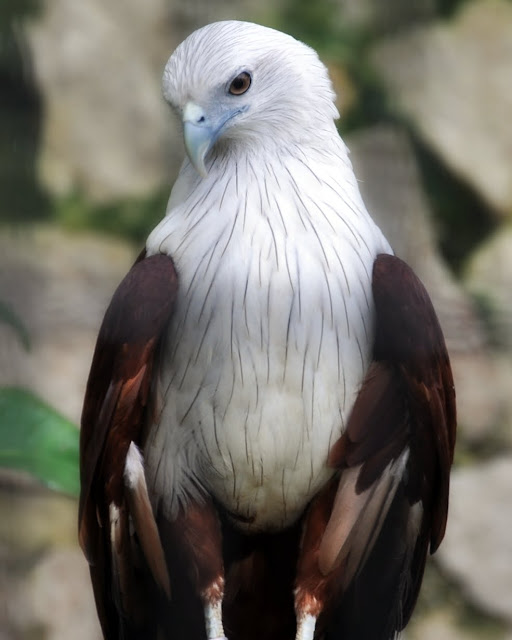
The National Bird of two countries - Zimbabwe and Zambia – the African Fish Eagle is a bird that, with its gorgeous snow white head, once seen is never forgotten.

The Eagle is found in most parts of the continent – as long as you are south of the edge of the Sahara Desert.  Also known as the African Sea Eagle it is found anywhere near where there is water containing fish.  It has a distinctive call which immediately identifies it, but what really stands out is its magnificent plumage.

It feeds mostly on fish – as the name suggests – but will also feed on other birds that feed and nest near water, such as flamingos.  It is also a well known kleptoparasite.  What that means is that it will steal prey from other birds – including its own species.  After all, why do all the hard work when you can just take your meal ready made and delivered?


It is a large bird with the female being bigger than the male.  She will typically weigh in at about eight pounds with the males reaching only around five and a half.  The males have a wing span of six feet while the female span reaching an enormous eight feet.  A very distinct bird, the mostly brown body and black wings are topped off with a beautiful snow white head and breast.  The tails too are typically white with the beak yellow with a black tip.  Overall, the bird has a particularly patrician look about it.

Like many species of birds the African Fish Eagle, once it finds a mate, stays loyal for life.  Breeding happens in the dry season when the level of water in the lakes is low and fish easier to catch.  The birds like to have more than one home and will often maintain multiple nesting sites, choosing the one that is most suitable each year.  The nest are used again and again and so grow very large with some of them reaching six feet across and four feet deep.

Once breeding is commenced the female will lay up to three eggs and she will be the one responsible for the incubation of the eggs. However, the male will (perhaps reluctantly) take his turn and allow his mate to go and hunt.  This is necessary as the incubation of the eggs lasts up to forty five days – if the male were to abandon the nest during this period the female would starve and the eggs would never hatch.

However, the male and female of this species will share equally anything that they catch so this would not happen.  Perhaps the female leaves the nest simply to stretch her wings.  After all, forty five days is a long time to sit in the same place.

The birds will very seldom raise all three chicks.  The eggs hatch a few days apart from each other and the older hatchling – given the advantage that a few days give it – usually kills the other chicks as they hatch.  After around seventy days the chick can feed itself and begins to leave the nest a few weeks after that.

The African FIsh Eagle hunts by perching in a tree above the waterline.  Once is spies a fish it will swoop down and snatch it from the water.  If by chance the fish is too heavy for it to lift in to the skies it will drag it across the water to the shore.  Fish are not the only food that the African Sea Eagle hunts – it will take waterfowl, turtles and baby crocodiles too – not to mention anything it can steal from its hapless neighbours.  Goliath Herons (yes, they are big) will lose a fair percentage of their catch to this Eagle.

Although they will hunt at any time of the day, they are early risers and prefer to get it out of the way by ten in the morning at the latest.  A beautiful and distinctive bird, the African Fish Eagle is not endangered at the moment.  It serves as another reminder of the beauties of Africa and the diversity of its animals.

Sleepy Bee

At first glance you might think that this bee has cast off this mortal coil and gone to honey heaven.  In fact, it is just having a light doze. This is a simply perfect picture of an Australian Native Bee, caught as the sun goes down, down under (as it were!).

Allow the use of cookies in this browser?

Ark In Space uses cookies from Google to deliver its services and to analyse traffic. Learn more about cookies and how they are used.
Allow cookies Cookies settings