The page cannot be found

Possible causes:


  • Baptist explanation: There must be sin in your life. Everyone else opened it fine.
  • Presbyterian explanation: It's not God's will for you to open this link.
  • Word of Faith explanation: You lack the faith to open this link. Your negative words have prevented you from realizing this link's fulfillment.
  • Charismatic explanation: Thou art loosed! Be commanded to OPEN!
  • Unitarian explanation: All links are equal, so if this link doesn't work for you, feel free to experiment with other links that might bring you joy and fulfillment.
  • Buddhist explanation: .........................
  • Episcopalian explanation: Are you saying you have something against homosexuals?
  • Christian Science explanation: There really is no link.
  • Atheist explanation: The only reason you think this link exists is because you needed to invent it.
  • Church counselor's explanation: And what did you feel when the link would not open?

The African Fish Eagle – Kleptoparasite Extraordinaire

Sunday, 6 October 2019


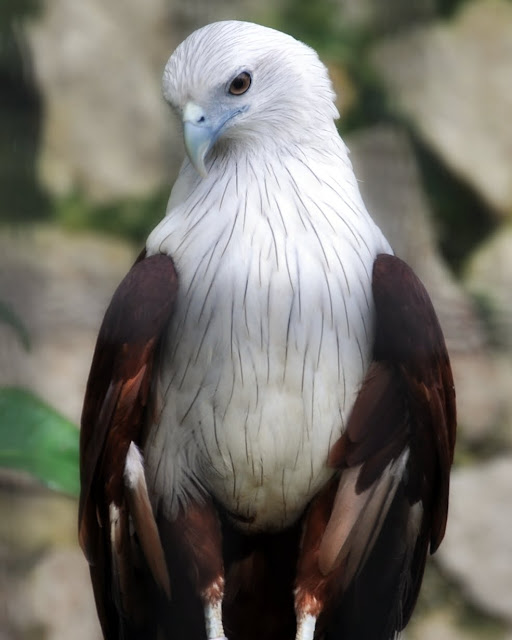
The National Bird of two countries - Zimbabwe and Zambia – the African Fish Eagle is a bird that, with its gorgeous snow white head, once seen is never forgotten.

The Eagle is found in most parts of the continent – as long as you are south of the edge of the Sahara Desert.  Also known as the African Sea Eagle it is found anywhere near where there is water containing fish.  It has a distinctive call which immediately identifies it, but what really stands out is its magnificent plumage.

The Spoon-billed Sandpiper – Last Ditch Attempt to Save the Species

Saturday, 6 August 2016

You are looking at pictures of an incredibly rare bird.  This is the Spoon-billed Sandpiper.  It is thought that less than one hundred and fifty breeding pairs are alive today.  In the next fifteen years this amazingly adapted bird may well slip quietly on to the ever increasing list of species whose extinction has been caused by humans.  

Yet if a group of bird experts succeed the spoon-billed sandpiper may pull back from the brink.

Return of the Wandering Warblers

Saturday, 15 May 2010

Each Spring the woodlands of America resound to the birdsong of returning visitors.  Warblers – fifty three species of them all in all – arrive and right now is the best time to see them as they migrate.  Their arrival heralds a dazzling dash of colour as the greenness of American forests is peppered as if with the ravishing hues of thousands of tiny precious stones.  Here are some of the returnees announcing the spring in their unique way.  It must be said that they usually seem to be a little happier than the disgruntled looking Yellow-rumped Warbler above.

The male Chestnut-sided warbler (above) cannot be mistaken.  They have dark-streaked grey backs with white faces and black eyestripes.  This is topped off with an olive crown.  They breed in the eastern North America and the south of Canada.

Like all New World Warblers, the Hooded Warbler (above) winters in Central America, only to return to the United States to nest every spring.  They feed on insects which they find in low vegetation or, rather more spectacularly, they will catch their meals by hawking.  This is when they watch for their prey from a perch and then fly after it and snatch it from the air in their beak.  The Hooded Warbler is often the victim of brood parisitism by the Brown-headed Cowbird.

Townsend’s Warbler is named after the US ornithologist John Kirk Townsend who discovered the bird in 1833 on an expedition that went across the Rocky Mountains and on to the Pacific Ocean. They make shallow cups for nests and usually lay four or five eggs. Where ranges overlap they breed with the very similar Hermit Warbler.

The Yellow Warbler breeds all over North America and in the summer the males of this group are the yellowest of all warblers (although with some washed out streaks on their breast), as you can see from the picture above.    This bird is also parasitized by the cowbird but they will often smother the egg with new nesting material or abandon the nest altogether.  Occasionally though, they will raise the cowbird with its own brood as, notably, the cowbird nestling will not attempt to kill the young of its host.

With the black stripe over his eyes the Magnolia variety looks like the Dick Turpin of the New World Warblers. It breeds in coniferous woodland and, like most warblers, lays its egg in a rather flimsy cup of a nest.  They will also feed on spiders and other insects and will even take berries in inclement weather when their natural prey stay hidden.

This beauty is the Prothonotary Warbler, so called because of the resemblance between it and officials of the Roman Catholic Church who bore the name originally and who wore golden vestments.   Unfortunately these birds are declining in numbers due to loss of habitat and also competition from the House Wren.

Many of the warblers here have a consistent problem with nest parisitism and you may not think that is too much of a problem. However, when you look at the difference in size between this Wilson's Warbler and the cowbird nestling that it has unwittingly raised as its own the issue becomes rather more transparent.  The picture below gives you an even better idea about just how small the Wilson's really is.

The Blue-winged Warbler (above) is fairly common and breads in eastern North America where its range is extending northwards.  A bird was once found in Ireland but it usually stays put in the Americas.  It nests in a very low bush or even on the ground and can lay up to seven eggs in a single clutch.

This cheeky looking chap is the Cape May Warbler which breeds in virtually all of Canada and in to New England and the Great Lakes.  It winters in the West Indies but when in its breeding habitat at the edge of coniferous forest it likes to nest in the thick foliage at the base of its preferred tree, the Black Spruce.  It can lay up to a magnificent nine eggs.

The Yellow-throated Warbler loves to live in coniferous forests but can also be found in swamps.  Although they eat insects and can catch them using a hovering technique they will also eat a large amount of berries and will consume nectar outside of their breeding time.  They will hide their nest with either conifer needles or Spanish Moss  and will usually lay four eggs.

The Yellow-rumped Warbler get its name for obvious reasons.

Our final warbler is the Northern Parula, the male of which develops rufous and bluish breast bands in the summer as well as very prominent white eye crescents. I would like to thank Michael McCarthy of the Independent newspaper, whose recent article on these birds (where he bemoans their lack of fame in the animal world) was the inspiration for this attempt to bring these warblers to a wider audience.

The African Fish Eagle – Kleptoparasite Extraordinaire

Saturday, 3 April 2010

The National Bird of two countries - Zimbabwe and Zambia – the African Fish Eagle is a bird that, with its gorgeous snow white head, once seen is never forgotten.

The Eagle is found in most parts of the continent – as long as you are south of the edge of the Sahara Desert.  Also known as the African Sea Eagle it is found anywhere near where there is water containing fish.  It has a distinctive call which immediately identifies it, but what really stands out is its magnificent plumage.

It feeds mostly on fish – as the name suggests – but will also feed on other birds that feed and nest near water, such as flamingos.  It is also a well known kleptoparasite.  What that means is that it will steal prey from other birds – including its own species.  After all, why do all the hard work when you can just take your meal ready made and delivered?


It is a large bird with the female being bigger than the male.  She will typically weigh in at about eight pounds with the males reaching only around five and a half.  The males have a wing span of six feet while the female span reaching an enormous eight feet.  A very distinct bird, the mostly brown body and black wings are topped off with a beautiful snow white head and breast.  The tails too are typically white with the beak yellow with a black tip.  Overall, the bird has a particularly patrician look about it.

Like many species of birds the African Fish Eagle, once it finds a mate, stays loyal for life.  Breeding happens in the dry season when the level of water in the lakes is low and fish easier to catch.  The birds like to have more than one home and will often maintain multiple nesting sites, choosing the one that is most suitable each year.  The nest are used again and again and so grow very large with some of them reaching six feet across and four feet deep.

Once breeding is commenced the female will lay up to three eggs and she will be the one responsible for the incubation of the eggs. However, the male will (perhaps reluctantly) take his turn and allow his mate to go and hunt.  This is necessary as the incubation of the eggs lasts up to forty five days – if the male were to abandon the nest during this period the female would starve and the eggs would never hatch.

However, the male and female of this species will share equally anything that they catch so this would not happen.  Perhaps the female leaves the nest simply to stretch her wings.  After all, forty five days is a long time to sit in the same place.

The birds will very seldom raise all three chicks.  The eggs hatch a few days apart from each other and the older hatchling – given the advantage that a few days give it – usually kills the other chicks as they hatch.  After around seventy days the chick can feed itself and begins to leave the nest a few weeks after that.

The African FIsh Eagle hunts by perching in a tree above the waterline.  Once is spies a fish it will swoop down and snatch it from the water.  If by chance the fish is too heavy for it to lift in to the skies it will drag it across the water to the shore.  Fish are not the only food that the African Sea Eagle hunts – it will take waterfowl, turtles and baby crocodiles too – not to mention anything it can steal from its hapless neighbours.  Goliath Herons (yes, they are big) will lose a fair percentage of their catch to this Eagle.

Although they will hunt at any time of the day, they are early risers and prefer to get it out of the way by ten in the morning at the latest.  A beautiful and distinctive bird, the African Fish Eagle is not endangered at the moment.  It serves as another reminder of the beauties of Africa and the diversity of its animals.

Allow the use of cookies in this browser?

Ark In Space uses cookies from Google to deliver its services and to analyse traffic. Learn more about cookies and how they are used.
Allow cookies Cookies settings