The page cannot be found

Possible causes:


  • Baptist explanation: There must be sin in your life. Everyone else opened it fine.
  • Presbyterian explanation: It's not God's will for you to open this link.
  • Word of Faith explanation: You lack the faith to open this link. Your negative words have prevented you from realizing this link's fulfillment.
  • Charismatic explanation: Thou art loosed! Be commanded to OPEN!
  • Unitarian explanation: All links are equal, so if this link doesn't work for you, feel free to experiment with other links that might bring you joy and fulfillment.
  • Buddhist explanation: .........................
  • Episcopalian explanation: Are you saying you have something against homosexuals?
  • Christian Science explanation: There really is no link.
  • Atheist explanation: The only reason you think this link exists is because you needed to invent it.
  • Church counselor's explanation: And what did you feel when the link would not open?

Born into Peril: The Turtle Hatchlings’ Dash to the Ocean

Thursday, 1 January 2026

Will these turtle hatchlings reach the sea without being captured by predators, and will they withstand the power of the waves once they get there?


On the beaches of Africa, a clutch of tiny turtle hatchlings emerges from the sand, driven by instinct alone. The journey before them is short in distance, but immense in danger. Every movement draws attention, and every second increases the odds stacked against them.  Although this video from the BBC does not explicitly state this, I have an idea that these are hatchlings of the Leatherback sea turtle (Dermochelys coriacea).


To say that they have the odds stacked against them is something of an understatement. Above, yellow-billed kites circle patiently, their sharp eyes trained on the shifting sand. Nearby, crows watch from a distance, intelligent and opportunistic, waiting for the moment to strike. At ground level, ghost crabs scuttle across the beach, perfectly adapted ambush predators ready to seize any hatchling that strays too close. Together, these hunters form a gauntlet that few will pass unscathed.


Of course, there is always one hatchling that emerges last. Smaller, slower, just a heartbeat behind the others. Naturally, our attention fixes on this one. We root for it, silently urging it forward, as if encouragement alone might tilt the balance in its favour. But what are the odds?


Even reaching the shoreline is not the end of the trial. The surf itself is a formidable barrier, its waves capable of dragging a fragile body back onto the sand or tumbling it helplessly in the shallows. And beyond the breaking waves, the danger does not disappear. A moment’s hesitation can be fatal, as a shadow passes overhead and a pair of sharp talons plunges down from the sky.


This is nature at its most uncompromising. No quarter is given, no second chances offered. Yet enough hatchlings survive to keep the species alive, just as they have for millions of years. Each successful dash to the sea is a small victory, not just for the turtle, but for life’s stubborn persistence against overwhelming odds.


Narrated in the measured, reverent tones we associate with Sir David Attenborough, this scene reminds us that survival in the natural world is never guaranteed — it is earned, moment by perilous moment.


Watch the video below:

The Driver Ant: Watch a Colony Rampage Through the Forest

Sunday, 13 July 2025

They are completely blind, but somehow driver ants (Dorylus wilverthi) manage to make their way through their African forest home.  They coordinate through chemical signals with the larger workers, with hooked jaws (that can bite us, yes indeed) protecting the smaller ones.  If they come across an obstacle – no problem, they just use themselves as bridges.  If you’re an insect and you get in the way of a driver ant swarm, you have no chance.  Even human babies and the infirm have been known to fall victim to a driver ant swarm…


This fascinating short documentary was made by a member of the Day’s Edge team when he was a teaching assistant in UCLA's Field Biology Quarter program. His class of 15 undergraduates spent three weeks conducting original research in Kibale National Park, Uganda. They encountered these amazing driver in the forest whenever they entered it. On his return to Los Angeles, he decided toc create a short documentary about the driver ant species.


Watch the video below.


The Remarkable Giraffe Weevil of Madagascar

Friday, 16 August 2024

Three guesses how the giraffe weevil gets its name. Unsurprisingly, this extraordinary looking Madagascan creature gets the name from its stupendously long neck.  It is three times longer in the male than the female of the species (Trachelophorus giraffa). As such it is sexually dimorphic – the male’s neck is used for aggressive combat.

When it comes to mating, it is certainly the male of the species which is more deadly.  The giraffe weevil has evolved its extended neck to fight for the right to a nearby female (which will patiently await the outcome of the fight and even occasionally act as a kind of referee before procreating with the winner). They show no aggression towards other species, neither hunting nor eating other animals. It is rare for males to kill each other in this struggle.

Welcome to Flamingo City

Saturday, 4 May 2024

Each year the lakes of Kenya play host to one of the world’s largest populations of flamingos. For a short period the area around a group of lakes is awash with pink as millions of lesser flamingos fly in to breed and one of the world's most spectacular displays takes place.

The Hyrax – The Elephant’s Cousin

Thursday, 17 February 2022

The Hyrax may look like a guinea pig to the casual observer but looks can be very deceptive.  It has even been called the rock rabbit but its family tree is much stranger than you might expect. Its nearest living relatives are the elephant and, bizarrely, the sea cow.

The African Fish Eagle – Kleptoparasite Extraordinaire

Sunday, 6 October 2019


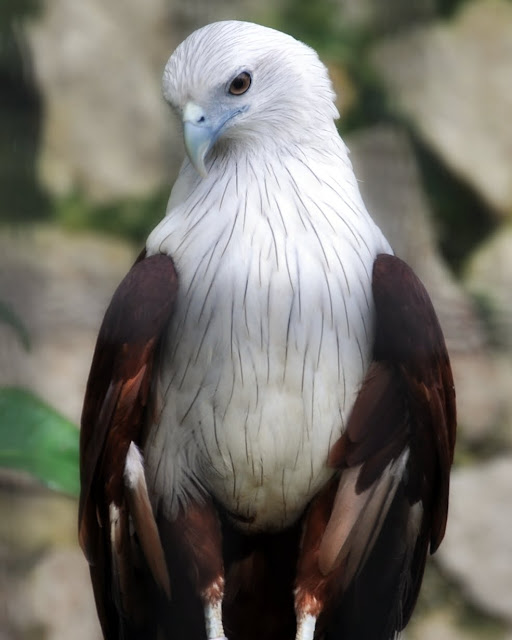
The National Bird of two countries - Zimbabwe and Zambia – the African Fish Eagle is a bird that, with its gorgeous snow white head, once seen is never forgotten.

The Eagle is found in most parts of the continent – as long as you are south of the edge of the Sahara Desert.  Also known as the African Sea Eagle it is found anywhere near where there is water containing fish.  It has a distinctive call which immediately identifies it, but what really stands out is its magnificent plumage.

The Meerkat - Sun Angel of Africa

Saturday, 5 January 2019

The Meerkat – if any species of animal had a right to be a little irritated by the name we have gifted them, this is one. Of course, they are blithely unaware of any names we might choose to call them, but this small mammal from the heart of Africa is anything but a mere cat.

The Spectacular Nests of the Sociable Weaver

Sunday, 2 September 2018

Not all bird species build nests.  Some, like the razorbill, lay an egg on a rocky ledge and hope for the best. Others, like the king penguin, have no access to nesting materials so keep their egg warm by squatting directly over it, covering it with their feathers.  Then there is the cuckoo, a brood parasite that lays its eggs in the nest of others.

Yet most species of birds do indeed make nests and they come in all shapes and sizes. Perhaps the most spectacular of all these is that created by a rather plain looking African bird, the sociable weaver (also known more simply as the social weaver).

Image Credit
They sociable weaver male is small – about 14cm (that’s 5.5 in) in length – and brown.  It is by no means unattractive – it has black barring on its back, a black chin and a nicely scalloped back.  As for the female… it’s identical.  They are not sexually dimorphic and to the naked eye the male and female are indistinguishable.  They may not stand out in a crowd, as it were, but as you can see their nests are another thing entirely.

The Bat-Eared Fox – Did You Ever See a Fox Fly?

Saturday, 26 May 2018

Around 800,000 years ago a species developed on the African Savannah, a canid but quite unlike any other. It was small – with a head and body length of only around 55 cm, tawny furred and with black ears. It is the ears which really make this mostly nocturnal animal stand out.  On average they are a staggering 14 centimeters in length.  Proportionally they may not be as large as Dumbo’s but this is no fictional appendage. These ears are for real.

The Sand Cat – Desert Cat Extraordinaire

Saturday, 21 April 2018

Don’t be fooled by the off the scale cuteness quotient. This is the Sand Cat – or Felis margarita, a little known species of desert cat. In the wild it lives in areas that are too hot and dry for any other cat- the deserts of Africa and Asia, including the Sahara. It is the only desert species of cat known to us. As such, this cat is one tough cookie.

It also lives in the Arabian desert and those of Iran and Pakistan, yet despite being so widespread it was not described by a European until 1858. That happened to be one Victor Loche, a French soldier and naturalist who explored the Northern Sahara and found the sand cat waiting patiently there for his descriptive skills.

Cool Facts About Zebras

Saturday, 26 June 2010

So, are zebras white with black stripes or are they black with white stripes?  An interesting question and often the first one asked by those of a curious nature when face to face with these beautifully coated creatures.  If you have pondered that question or want to know more about zebras in general then this article has some really cool facts about these strange equine animals.  It has all the answers - for example, how many species of zebra are there?  Where do zebras live?  Oh - and that other question that people ask - what on earth is a quagga?

Written by Brenda Nelson, you can also ask her about animals at her Factoidz page.

Image Credit Flickr User catlover

The Scimitar Oryx - Charismatic Antelope of the Desert

Once one of the most numerous horned animals in North Africa, the Scimitar Oryx has now been classified as extinct in the wild. A pale antelope with a ruddy chest this almost horse-like mammal would perhaps be unremarkable save for one thing – it’s majestic and incredibly long curved horns. For this reason it was hunted almost to extinction.

Its name too comes from its horns – they are shaped very much like a scimitar, a relatively light weight sword which originated in the Middle East. When they numbered in their millions the animals would have formed mixed gender herds of up to seventy or so. When it was time for them to follow their yearly migration they would come together in groups that numbered in their thousands. Can you imagine what a magnificent sight that would have been?

The male and the female of the species both possess the remarkable scimitar horns. The male can reach 125 cm in height and weigh in at an impressive 200kg. The color of its coat is so light so it can reflect the heat of the sun in dessert conditions. Their territories used to cover an incredible 3000 square kilometers and the Oryx would know every part of their journey, avoiding unfavorable locations.

The horns can grow up to 175cm, which is an incredible length considering the height of the species. When mating season begins the males will partake in spectacular fights – and they really mean it too. Horns are often broken and sometimes one of the combatants might die. It is thought that perhaps a one horned oryx who had lost the other in a fight may have contributed to the myth of the unicorn.

The Scimitar Oryx looks a little delicate, but it is a hardy species that in the wild inhabited desert and step where their diet consisted of grasses, leaves and – when they could get it – fruit. They have specially adapted kidneys which mean that they can live without drinking any water for weeks at a time. This is also due to the fact that they can change their body temperature at will and so avoid losing water through perspiration.
They can certainly cope with extreme conditions. At 42-45 degrees centigrade most other animals would expire but the Scimitar Oryx can still survive. One thing which helps is a habit they have formed of licking dew off each other’s coats at night. When water is around they are voracious – after giving birth the female can easily consume twenty percent of her body weight in water.

There were serious droughts in the early twentieth century and the numbers declined drastically as the animals continued to be hunted by desert nomad tribes who were also struggling to survive. However, two things contributed to the downfall of this swift and gregarious animal – the development of the gun and motor vehicles.

Where they once occupied the whole of the Sahara region and numbered in the very least in their hundreds of thousands, today they are restricted to zoos and sanctuaries. There has not been a single substantiated Scimitar Oryx sighting in the wild for almost twenty years.

So, how many of these remarkable animals are left today? After a captive breeding programme began in the 1960s their numbers have risen. It is thought that around five thousand exist altogether. There are hopes that someday the Scimitar Oryx can be reintroduced in to the wild in Tunisia where there is a herd that is protected within a fenced preserve.

The Sahara Conservation Fund is researching the full reintroduction of the species in to all of its previous range. Although there are many issues to be overcome, such a geographical bottlenecks, genetics and husbandry there may well be hope for this most enigmatic antelope of the desert.

The African Fish Eagle – Kleptoparasite Extraordinaire

Saturday, 3 April 2010

The National Bird of two countries - Zimbabwe and Zambia – the African Fish Eagle is a bird that, with its gorgeous snow white head, once seen is never forgotten.

The Eagle is found in most parts of the continent – as long as you are south of the edge of the Sahara Desert.  Also known as the African Sea Eagle it is found anywhere near where there is water containing fish.  It has a distinctive call which immediately identifies it, but what really stands out is its magnificent plumage.

It feeds mostly on fish – as the name suggests – but will also feed on other birds that feed and nest near water, such as flamingos.  It is also a well known kleptoparasite.  What that means is that it will steal prey from other birds – including its own species.  After all, why do all the hard work when you can just take your meal ready made and delivered?


It is a large bird with the female being bigger than the male.  She will typically weigh in at about eight pounds with the males reaching only around five and a half.  The males have a wing span of six feet while the female span reaching an enormous eight feet.  A very distinct bird, the mostly brown body and black wings are topped off with a beautiful snow white head and breast.  The tails too are typically white with the beak yellow with a black tip.  Overall, the bird has a particularly patrician look about it.

Like many species of birds the African Fish Eagle, once it finds a mate, stays loyal for life.  Breeding happens in the dry season when the level of water in the lakes is low and fish easier to catch.  The birds like to have more than one home and will often maintain multiple nesting sites, choosing the one that is most suitable each year.  The nest are used again and again and so grow very large with some of them reaching six feet across and four feet deep.

Once breeding is commenced the female will lay up to three eggs and she will be the one responsible for the incubation of the eggs. However, the male will (perhaps reluctantly) take his turn and allow his mate to go and hunt.  This is necessary as the incubation of the eggs lasts up to forty five days – if the male were to abandon the nest during this period the female would starve and the eggs would never hatch.

However, the male and female of this species will share equally anything that they catch so this would not happen.  Perhaps the female leaves the nest simply to stretch her wings.  After all, forty five days is a long time to sit in the same place.

The birds will very seldom raise all three chicks.  The eggs hatch a few days apart from each other and the older hatchling – given the advantage that a few days give it – usually kills the other chicks as they hatch.  After around seventy days the chick can feed itself and begins to leave the nest a few weeks after that.

The African FIsh Eagle hunts by perching in a tree above the waterline.  Once is spies a fish it will swoop down and snatch it from the water.  If by chance the fish is too heavy for it to lift in to the skies it will drag it across the water to the shore.  Fish are not the only food that the African Sea Eagle hunts – it will take waterfowl, turtles and baby crocodiles too – not to mention anything it can steal from its hapless neighbours.  Goliath Herons (yes, they are big) will lose a fair percentage of their catch to this Eagle.

Although they will hunt at any time of the day, they are early risers and prefer to get it out of the way by ten in the morning at the latest.  A beautiful and distinctive bird, the African Fish Eagle is not endangered at the moment.  It serves as another reminder of the beauties of Africa and the diversity of its animals.

Fossa Fella

Tuesday, 23 March 2010


You probably haven't heard of the Fossa before - but what a charming fella he is. A native of Madagascar the closest relative in the animal kingdom that his guy has is the mongoose. As such the Fossa is the largest mammalian carnivore on the island of Madagascar (unless you count us of course). There are only about two and a half thousand of these animals left in the wild, with numbers declining as their habitat becomes disconnetced and patchy due to the growth of the human population.

Allow the use of cookies in this browser?

Ark In Space uses cookies from Google to deliver its services and to analyse traffic. Learn more about cookies and how they are used.
Allow cookies Cookies settings